Root Canal Treatment
Management of Infection or Inflammation Within a Tooth
Root canal treatment is a dental procedure used to treat infection or inflammation affecting the dental pulp, the soft tissue inside a tooth.
The aim of treatment is to remove the affected pulp tissue, clean and disinfect the root canal system, and seal the tooth to help manage the infection and preserve the natural tooth where possible.
What Is Root Canal Treatment?
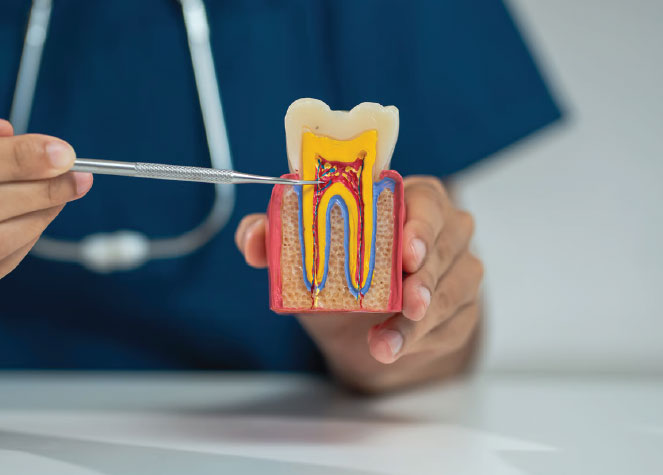
Inside each tooth is a soft tissue called the dental pulp, which contains nerves and blood vessels. The pulp can become inflamed or infected for several reasons, including deep tooth decay, cracks, trauma or repeated dental procedures.
When the pulp is significantly inflamed or infected and cannot recover, root canal treatment may be recommended.
During root canal treatment, the affected pulp tissue is removed. The root canal system is then cleaned, disinfected and sealed to help prevent bacteria from entering the space again.
Your dentist will carry out a clinical examination and may recommend dental X-rays or other assessments to determine whether root canal treatment is appropriate.
What Does Root Canal Treatment Involve?
Root canal treatment may be completed over one or more visits, depending on the condition of the tooth and the complexity of the treatment.
During the procedure:
- Local anaesthesia is used to numb the tooth and surrounding area.
- An opening is made in the tooth to access the pulp chamber.
- The affected pulp tissue is removed.
- The root canals are cleaned, disinfected and shaped.
- The canals are filled and sealed.
A temporary filling may be placed if further treatment is required at a subsequent visit. The tooth will then usually require a permanent restoration, such as a filling or crown, depending on the condition, location and amount of remaining tooth structure.
Restoration After Root Canal Treatment
Teeth that have undergone root canal treatment may be more susceptible to fracture. A permanent restoration helps protect the tooth and restore function. The type of restoration recommended will depend on clinical factors and will be discussed during consultation.
Aftercare and Recovery
Some discomfort or sensitivity may occur for a short period following root canal treatment. This usually settles as the tooth and surrounding tissues recover.
Your dentist will provide aftercare instructions and may recommend follow-up appointments where appropriate.
If you experience significant or worsening pain, swelling or other concerns following treatment, contact your dental clinic for advice.
Can a Tooth Always Be Saved With Root Canal Treatment?
Root canal treatment is intended to preserve a natural tooth where possible, but it may not be suitable for every tooth.
The treatment options will depend on factors such as the condition of the tooth, the amount of remaining tooth structure, the surrounding tissues and your overall dental needs. Your dentist will assess the tooth and discuss the available options with you.
If you have symptoms that may indicate an infection or have been advised that root canal treatment may be required, a dental consultation is recommended. Your dentist can assess your condition and discuss suitable treatment options based on your individual needs.
Contact us via phone or WhatsApp to arrange an appointment.
Book an appointment